
Advice
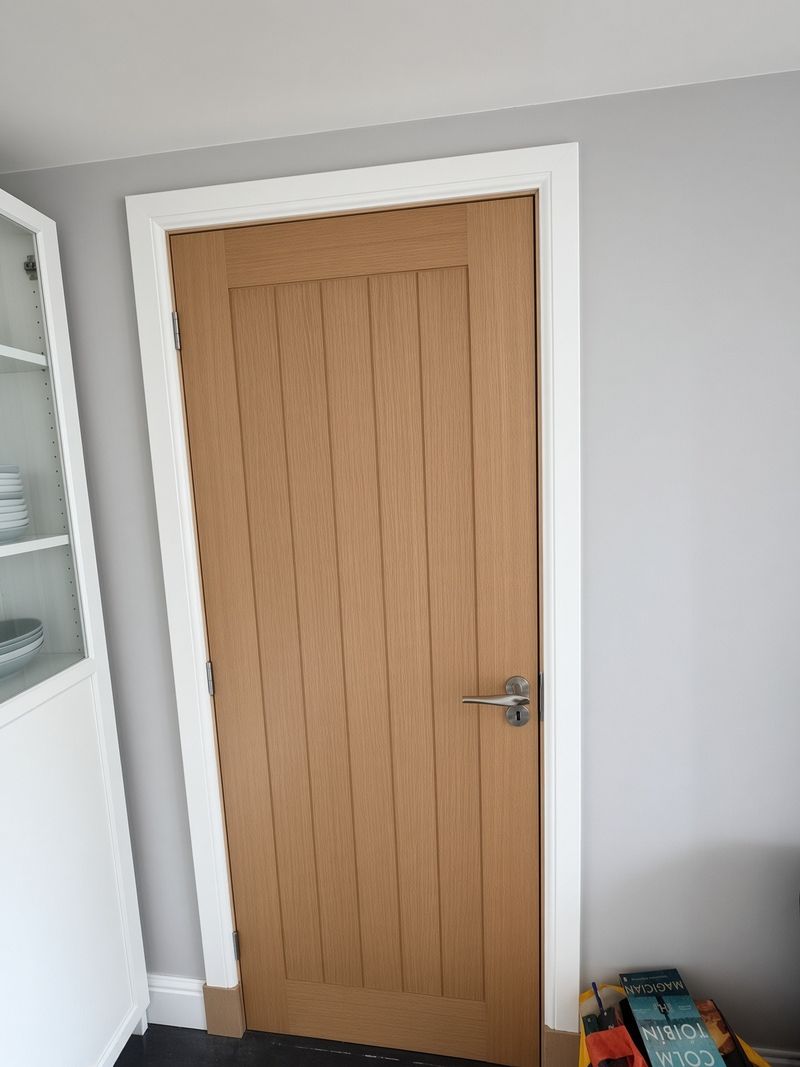
Door sticking or won’t shut? What to check first
A door that sticks, rubs or won’t latch rarely needs replacing. Most of the time it’s one of a handful of causes, and a couple of them you can check yourself in five minutes.
1. Find where it’s catching
Close the door slowly and watch the gap between the door and the frame. It should be roughly even all the way round. Look for rub marks or worn paint on the edge of the door or the frame — that’s where it’s catching.
- Top corner on the handle side — usually the door has dropped on its hinges, very often because the top hinge screws have worked loose.
- Along the bottom — usually the floor: new carpet, a new floor laid over the old one, or a threshold that’s higher than it was.
- All along the handle side — usually swelling in damp weather, or layers of paint built up on the edge over the years.
2. Check the hinge screws
Open the door and try tightening each hinge screw, top hinge first. If the door has dropped, that alone can lift it back clear of the frame. If a screw just spins, the hole has worn out and it won’t hold — that needs a longer screw or the hole filling and re-drilling, which is a small job but worth doing properly.
3. Is it worse in winter?
Timber takes up moisture, so a door can stick in damp months and be fine in summer. Planing a lot off while it’s swollen can leave a gap you don’t want later, so it’s worth knowing whether it’s seasonal before anything gets taken off.
4. Door won’t latch
If the door closes but won’t stay shut, look at where the latch meets the metal strike plate on the frame. Scratches above or below the hole mean the latch is missing it — either the door has dropped (back to the hinges) or the strike plate needs moving slightly.
5. New flooring or carpet
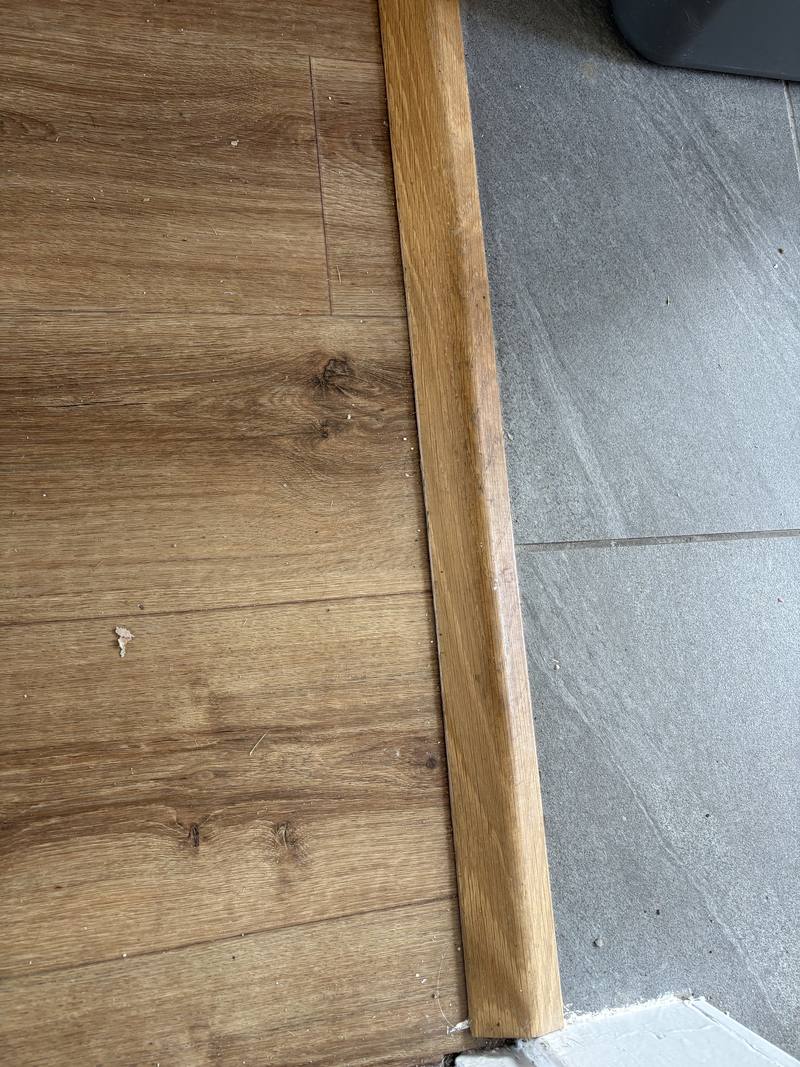
If the door started catching after new flooring went down, it needs trimming at the bottom. That means taking the door off and cutting it square, not planing it on the hinges, so it hangs level afterwards. The oak threshold below was fitted where a new floor meets a tiled one.
When it’s worth getting a joiner
It’s a job for a joiner when the door needs to come off to be planed or trimmed, the hinges need re-setting, the screw holes have worn out, or the frame itself has moved. That’s the work on the doors and second-fix page, and there’s no minimum job size — one sticking door is fine.
If you’re in or around Crieff, send a photo of the door and where it’s catching. I’ll tell you straight whether it’s a quick fix. The places I cover are on the areas page.
Door still sticking?
Send a photo of the door and where it catches. The quote is free and there’s no call-out charge.
Or text a photo to 07940 554342